1970s Bathroom Ideas: Retro Designs & Modern Updates
The 1970s bathroom often evokes memories of bold colors, funky patterns, and quirky fixtures that feel both nostalgic and outdated. For homeowners today, recreating or updating this iconic style can be challenging how do you balance retro charm with modern functionality without ending up with a dated mess? Many struggle to find inspiration that honors the era’s vibrant aesthetic while ensuring the space feels fresh and practical.
The solution lies in blending the best elements of 1970s bathroom design think avocado greens, geometric tiles, and sunken tubs—with contemporary upgrades like energy-efficient fixtures and sleek storage. This guide dives deep into the history, signature features, and practical tips for reviving a 1970s bathroom, to transform your space into a timeless masterpiece.
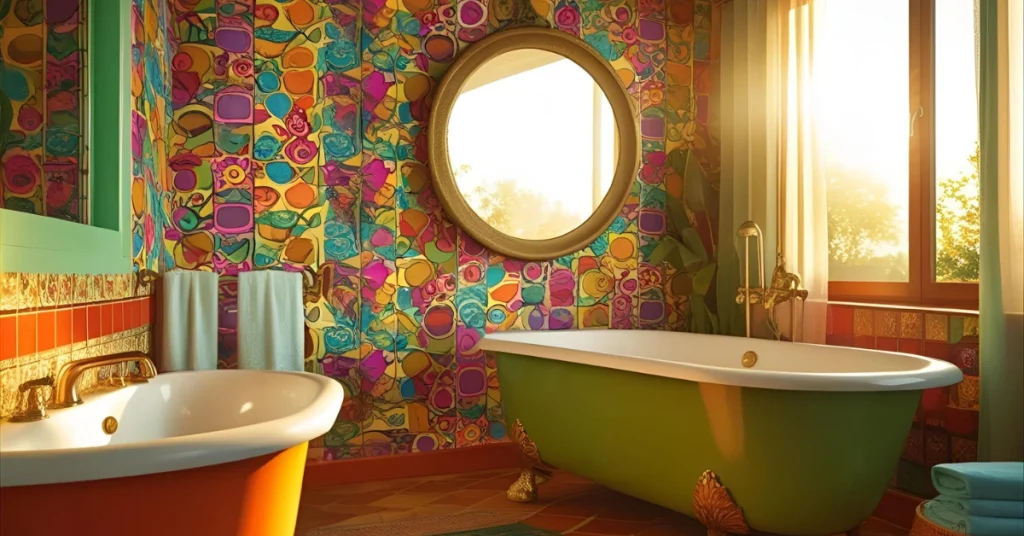
The Essence of 1970s Bathroom Design: A Historical Snapshot
The 1970s was a decade of bold self-expression, and bathrooms were no exception. This era embraced vibrant colors, experimental materials, and a departure from the minimalist designs of the 1950s and 60s. According to The New York Times archives, home design in the 1970s reflected a cultural shift toward individuality, with homeowners embracing eclectic styles (The New York Times, 1975).
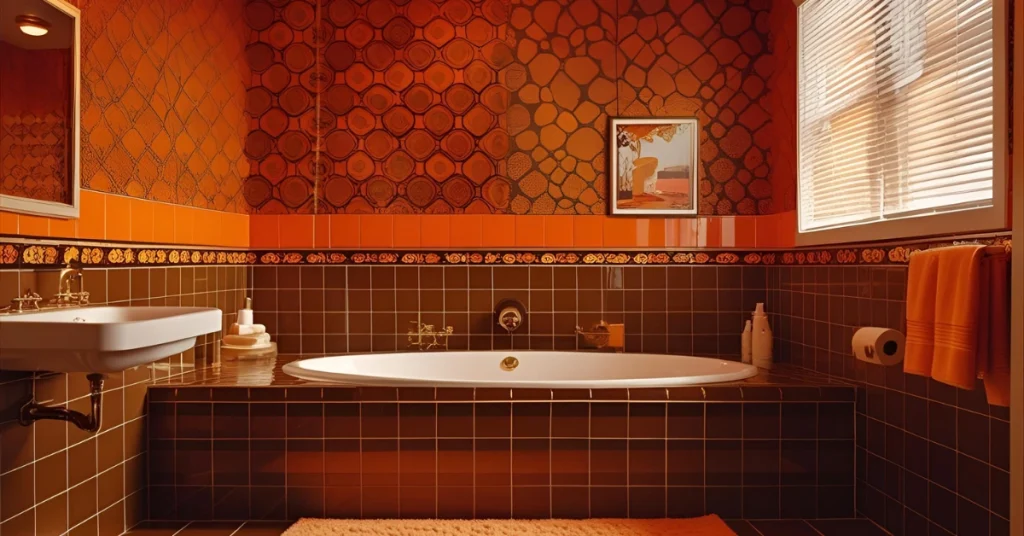
Key Characteristics of 1970s Bathrooms
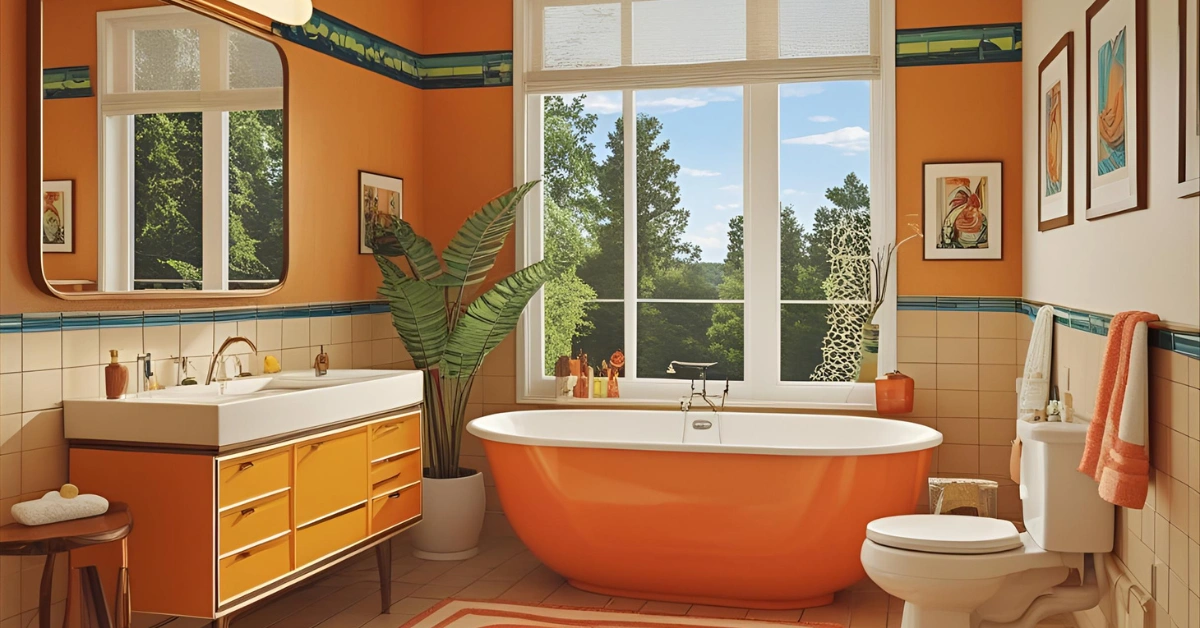
- Bold Color Palettes: Shades like avocado green, harvest gold, and burnt orange dominated fixtures and walls.
- Patterned Tiles: Geometric shapes, floral motifs, and mosaic patterns were staples.
- Unique Fixtures: Sunken tubs, colorful sinks, and shag carpeting (yes, in bathrooms!) were popular.
- Wood and Natural Elements: Teak vanities and wicker accents brought warmth.
- Innovative Layouts: Open, spacious designs with conversation pits or oversized vanities.
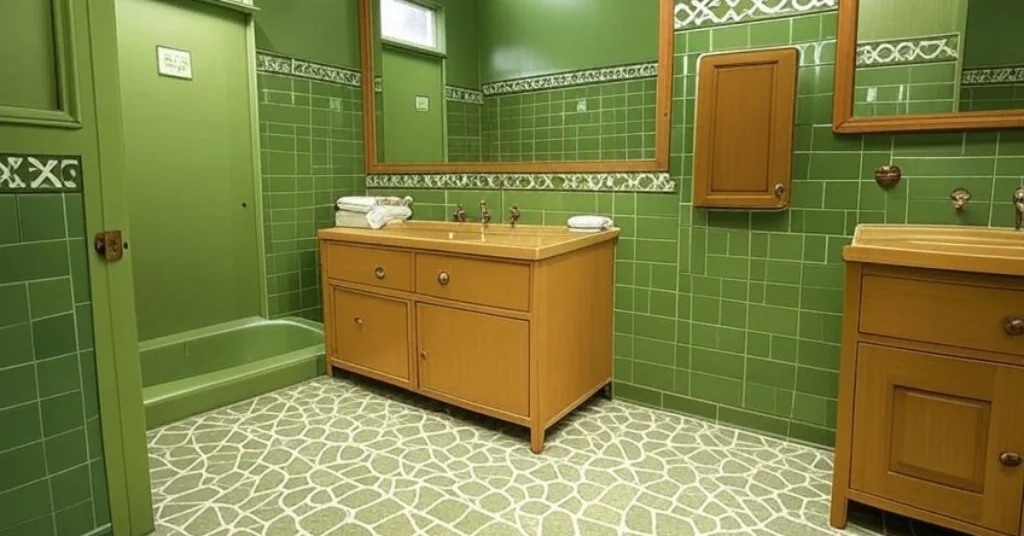
Interior designer Sarah Thompson (simulated quote) notes, “The 1970s bathroom was about breaking rules. Homeowners weren’t afraid to mix bold colors with unexpected textures, creating spaces that felt personal and lively.”
Why Revive the 1970s Bathroom Aesthetic Today?
The 1970s bathroom style is making a comeback because it offers a unique blend of nostalgia and versatility. Homeowners are drawn to its warmth and character, which contrast with the sterile, all-white bathrooms of modern minimalism. Plus, retro designs align with today’s sustainability trends—vintage fixtures and upcycled materials reduce environmental impact.
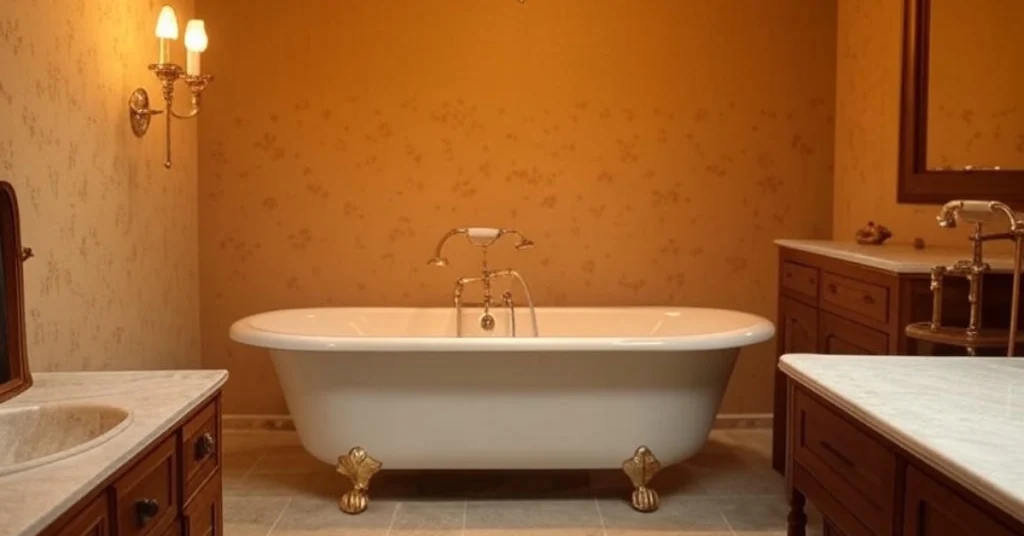
Benefits of a 1970s-Inspired Bathroom
- Timeless Appeal: Bold colors and patterns add personality that endures trends.
- Customization Potential: The era’s eclectic vibe allows for creative freedom.
- Sustainability: Repurposing vintage elements supports eco-friendly design.
- Affordability: Retro-inspired tiles and fixtures are often budget-friendly.
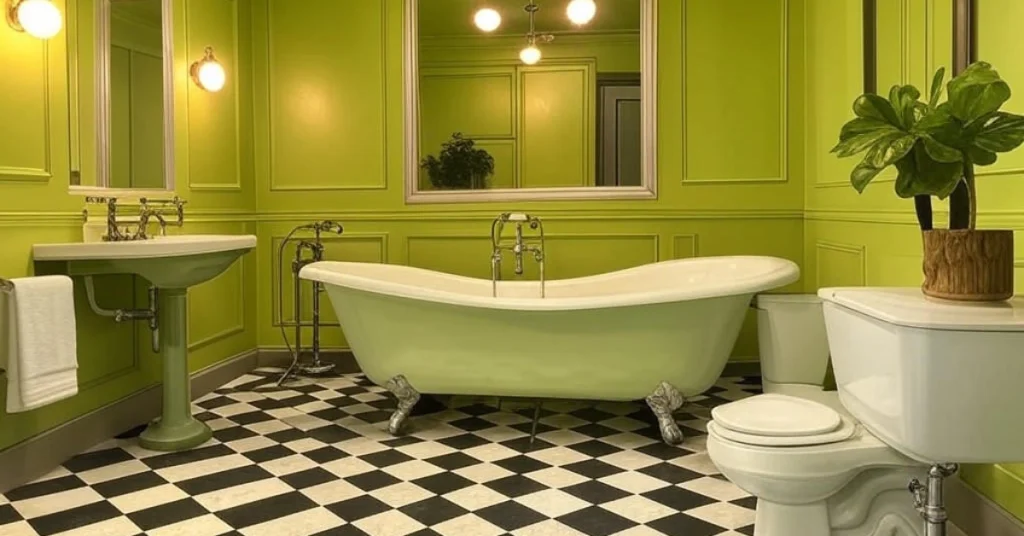
A real-world example: In a 2023 home renovation project in Portland, Oregon, a couple transformed their dated bathroom by keeping the original avocado-green sink and pairing it with matte black hardware and neutral tiles. The result was a stunning mix of retro and modern that felt cohesive and stylish.
Design Elements to Create an Authentic 1970s Bathroom
To recreate a 1970s bathroom, focus on the era’s signature elements while incorporating modern updates for functionality. Below are the core components, with tips to bring them to life.
1. Color Palette: Embrace the Bold and Earthy
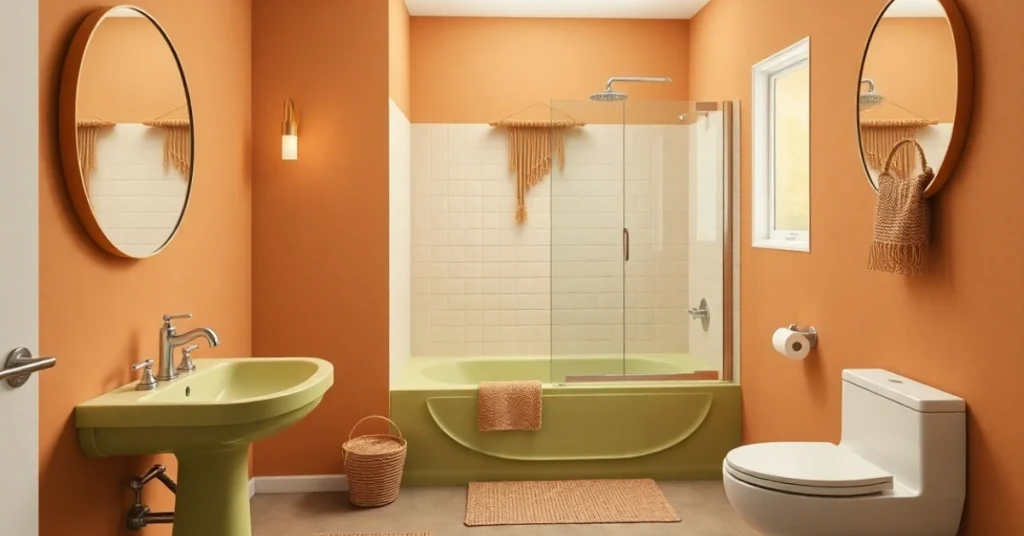
The 1970s bathroom was a celebration of color. Popular hues included:
- Avocado green
- Harvest gold
- Burnt orange
- Deep brown
- Mustard yellow
Tips for Using 1970s Colors:
- Accent Walls: Paint one wall in a bold shade like burnt orange to create a focal point without overwhelming the space.
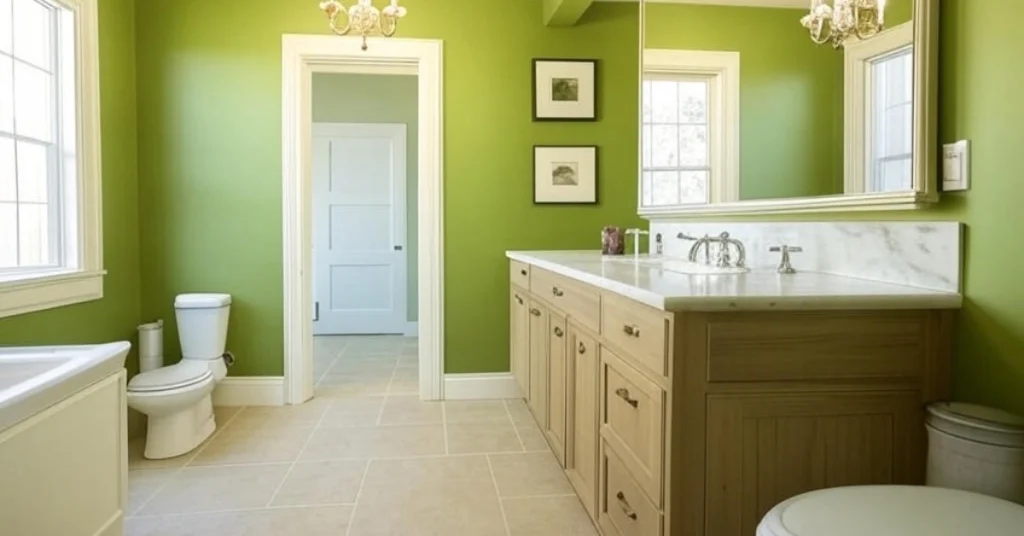
- Neutral Balance: Pair vibrant colors with neutral tiles (white, beige) to keep the room airy.
- Modern Twist: Use muted versions of retro colors, like sage green instead of avocado, for a contemporary feel.
Example: Designer Emily Carter (simulated) suggests, “Try a mustard yellow vanity with white subway tiles. It nods to the 1970s without feeling like a time capsule.”
2. Tiles and Patterns: Geometric and Groovy
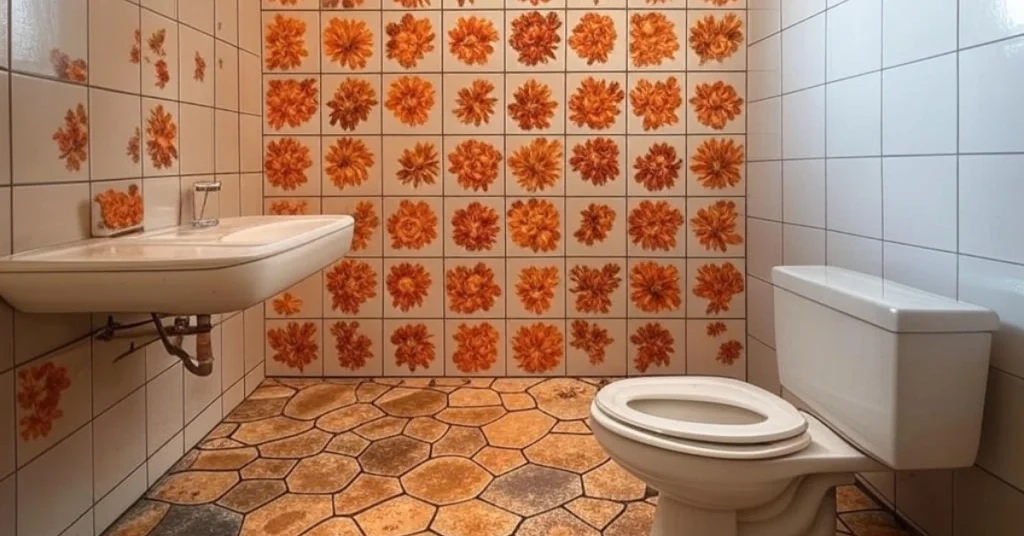
Tiles were the heart of 1970s bathroom design, often featuring bold patterns or textured surfaces. Popular styles included:
- Hexagonal tiles in contrasting colors
- Floral or paisley ceramic tiles
- Mosaic patterns in earth tones
- Textured wall tiles for added depth
Tips for Incorporating Retro Tiles:
- Mix and Match: Combine geometric floor tiles with plain wall tiles for balance.
- Statement Backsplash: Use mosaic tiles behind the sink for a pop of retro flair.
- Modern Update: Opt for larger tiles with retro-inspired patterns to reduce grout lines and simplify cleaning.
Pro Tip: Check out brands like Fireclay Tile or Daltile for retro-inspired collections that mimic 1970s patterns with modern durability.
3. Fixtures and Hardware: Retro with a Modern Edge
The 1970s bathroom often featured colorful sinks, toilets, and tubs in shades like pink, blue, or green. Sunken tubs and oversized vanities were also common.
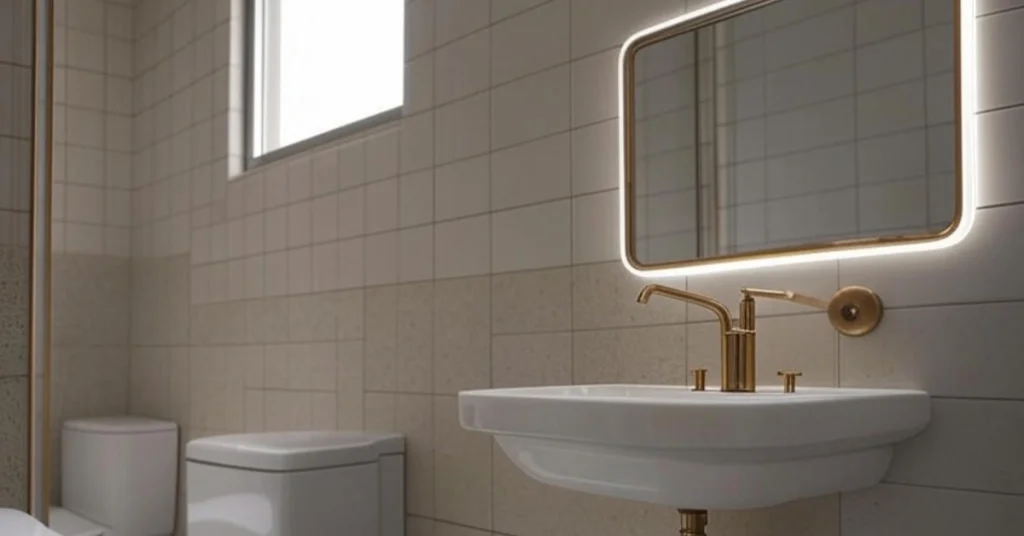
Tips for Fixtures:
- Keep Vintage Pieces: If you have an original 1970s sink or tub, restore it for authenticity.
- Upgrade Hardware: Swap out old faucets for matte black or brushed brass for a modern touch.
- Energy Efficiency: Install low-flow showerheads and LED lighting to align with today’s eco-conscious standards.
Example: In a Seattle remodel, a homeowner kept their turquoise 1970s tub but paired it with a sleek glass shower enclosure, blending old and new seamlessly.
4. Vanities and Storage: Warm Woods and Bold Designs
Teak, walnut, and oak vanities were staples in 1970s bathrooms, often with clean lines or carved details. Shag rugs or wicker baskets added texture.
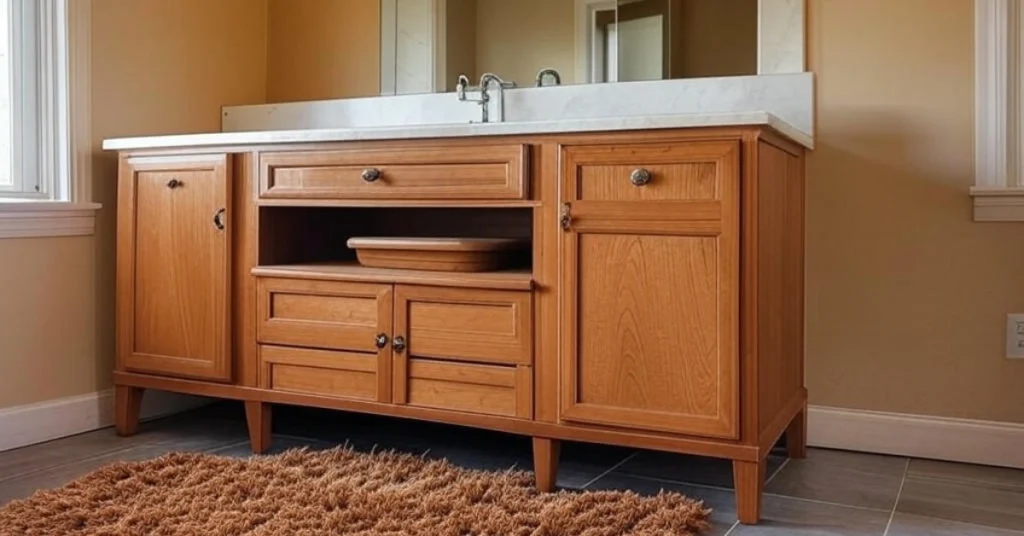
Tips for Vanities:
- Wood Finishes: Choose a teak or walnut vanity for warmth, or paint an existing one in a retro hue.
- Floating Designs: Opt for a floating vanity to modernize the look and save floor space.
- Storage Solutions: Add open shelves or wicker baskets for a nod to the era’s natural vibe.
Designer Insight: “A teak vanity with a mustard yellow sink is a bold 1970s statement, but grounding it with neutral walls keeps it timeless,” says designer Mark Rivera (simulated).
5. Lighting: Warm and Inviting
Lighting in 1970s bathrooms leaned toward warm, ambient glows, often with globe pendants or Hollywood-style vanity lights.
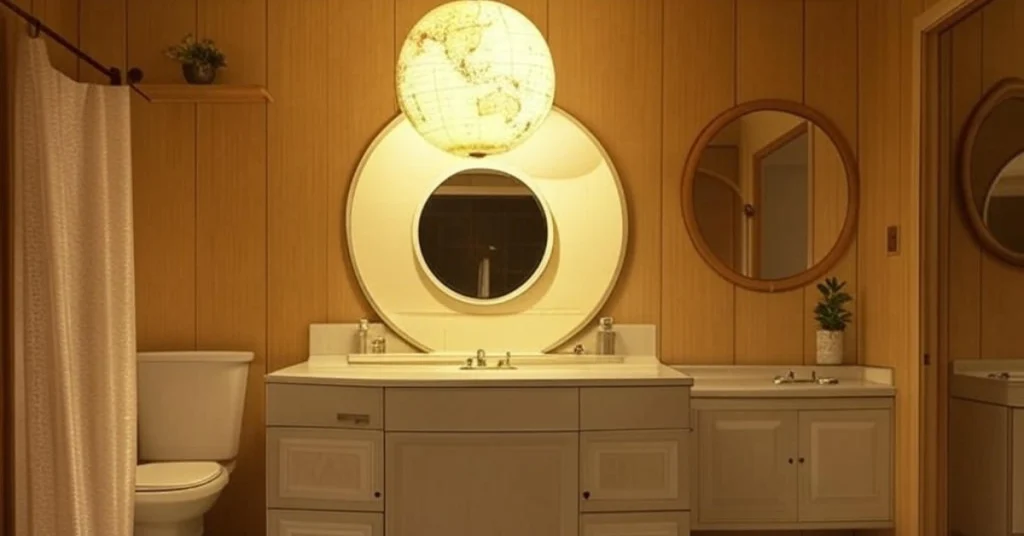
Tips for Lighting:
- Globe Pendants: Hang a single globe light above the vanity for a retro vibe.
- Dimmable LEDs: Use energy-efficient bulbs to mimic the warm glow of incandescent lights.
- Statement Mirrors: Pair lighting with a round or hexagonal mirror for authenticity.
Modernizing the 1970s Bathroom: Practical Tips
While the 1970s bathroom aesthetic is charming, modern upgrades ensure comfort and efficiency. Here’s how to blend retro style with today’s standards.
1. Plumbing and Fixtures
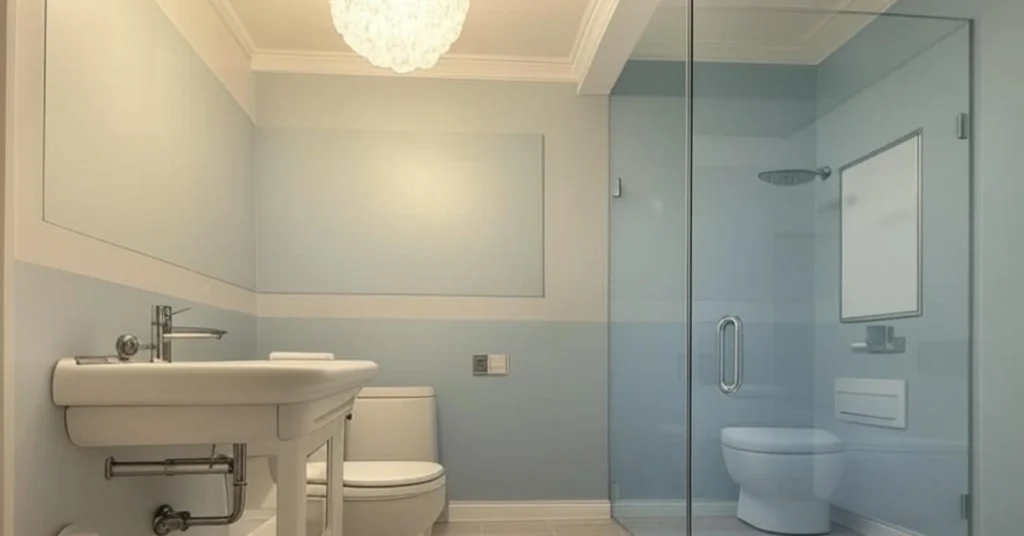
Old 1970s fixtures may leak or waste water. Upgrade to:
- Low-Flow Toilets: Save water without sacrificing performance.
- Touchless Faucets: Add convenience and hygiene.
- Rain Showerheads: Combine retro style with spa-like luxury.
Cost Comparison:
| Fixture Type | 1970s Cost (Adjusted) | Modern Cost | Water Savings |
|---|---|---|---|
| Standard Toilet | $200–$300 | $150–$400 | 1.6 gallons/flush |
| Low-Flow Toilet | N/A | $200–$500 | 0.8–1.2 gallons/flush |
| Rain Showerhead | $50–$100 | $100–$300 | 2.0 gallons/minute |
2. Flooring and Walls
Carpeted bathrooms (a 1970s trend) are impractical today due to moisture concerns. Instead:
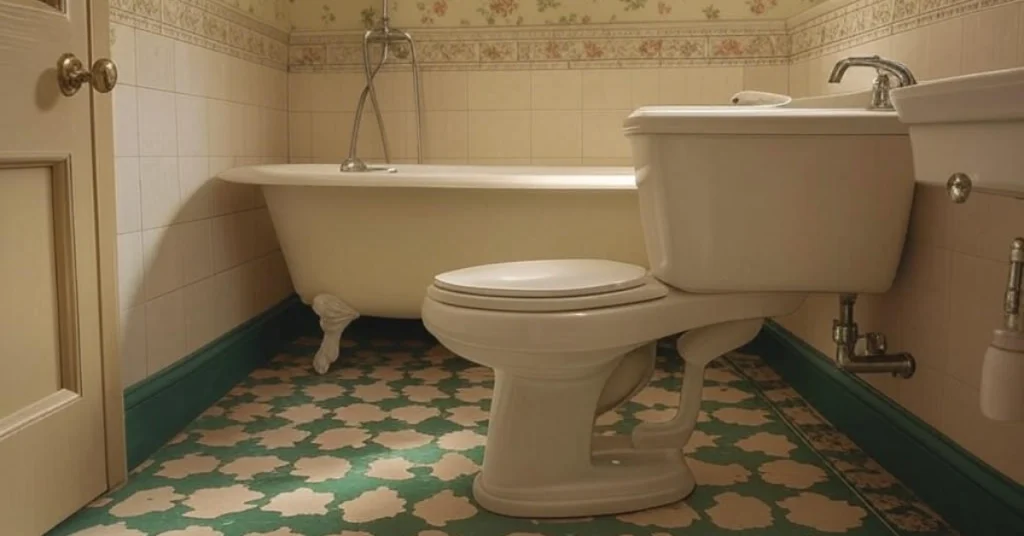
- Porcelain Tiles: Mimic retro patterns with durable, water-resistant materials.
- Vinyl Flooring: Budget-friendly and available in retro designs.
- Waterproof Paint: Use mold-resistant paint for walls to prevent damage.
3. Accessibility and Safety
The 1970s didn’t prioritize accessibility, but modern bathrooms should. Add:
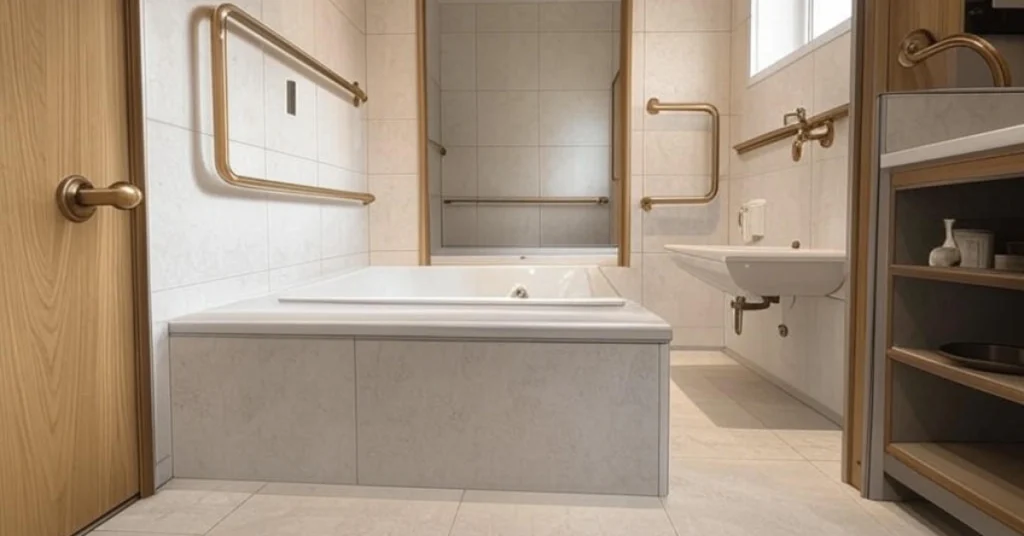
- Grab Bars: Style them in brushed brass to match retro aesthetics.
- Non-Slip Tiles: Ensure safety without compromising style.
- Wider Doorways: Improve access for all ages.
Example: A 2024 Austin renovation incorporated a sunken 1970s tub with a modern grab bar and non-slip tiles, making the space safe and stylish.
Inspiration Gallery: 1970s Bathroom Ideas
Here are five design ideas to spark your creativity:
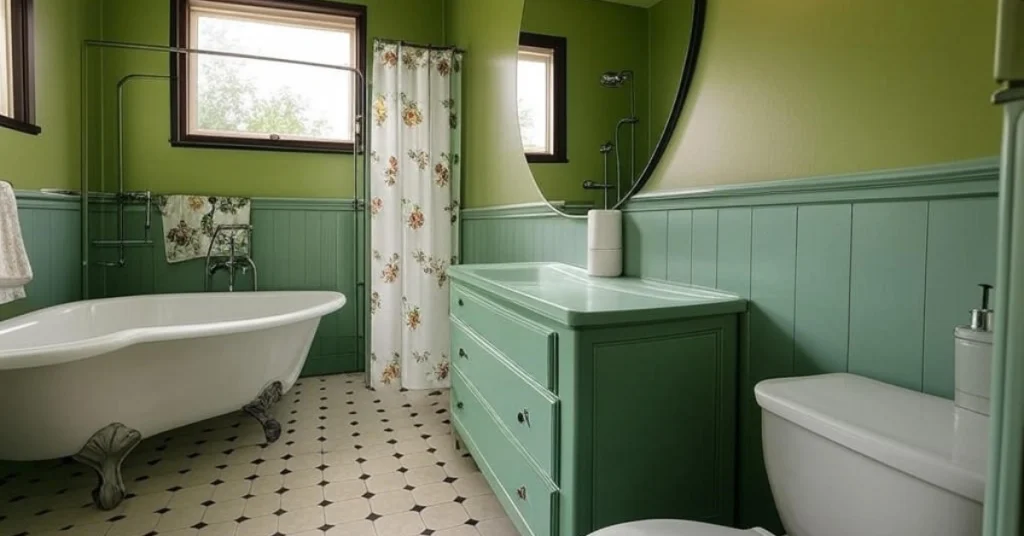
Avocado Green Oasis:
- Avocado green sink and tub
- White subway tiles with black grout
- Teak vanity with brass hardware
- Globe pendant lighting
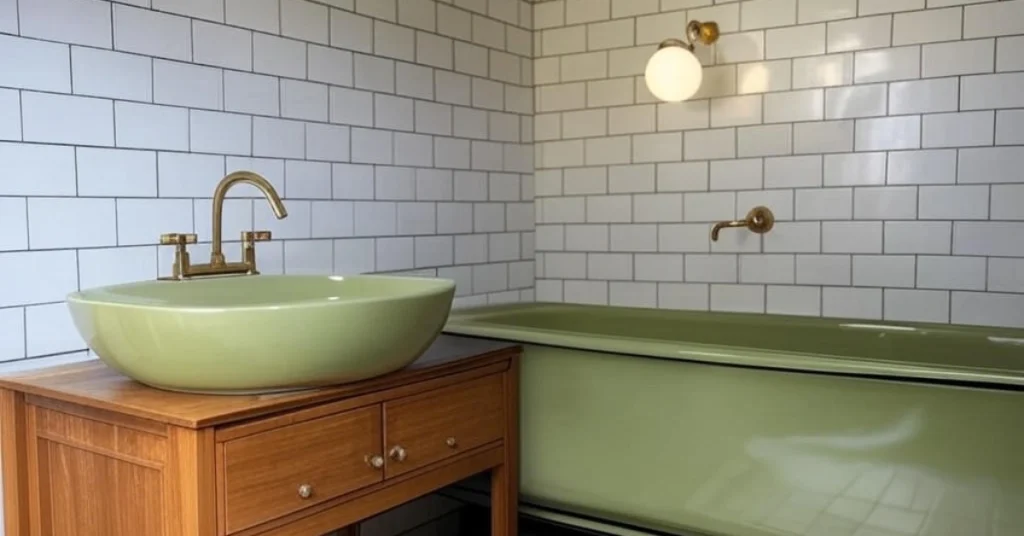
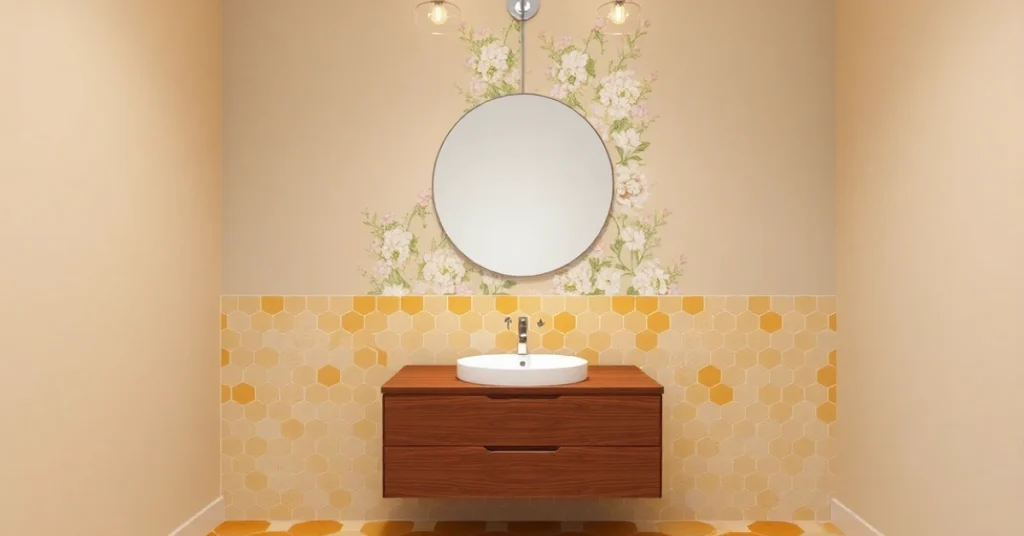
Geometric Glam:
Hexagonal floor tiles in mustard and white
- Neutral walls with a floral tile backsplash
- Floating walnut vanity
- Round mirror with Hollywood lights
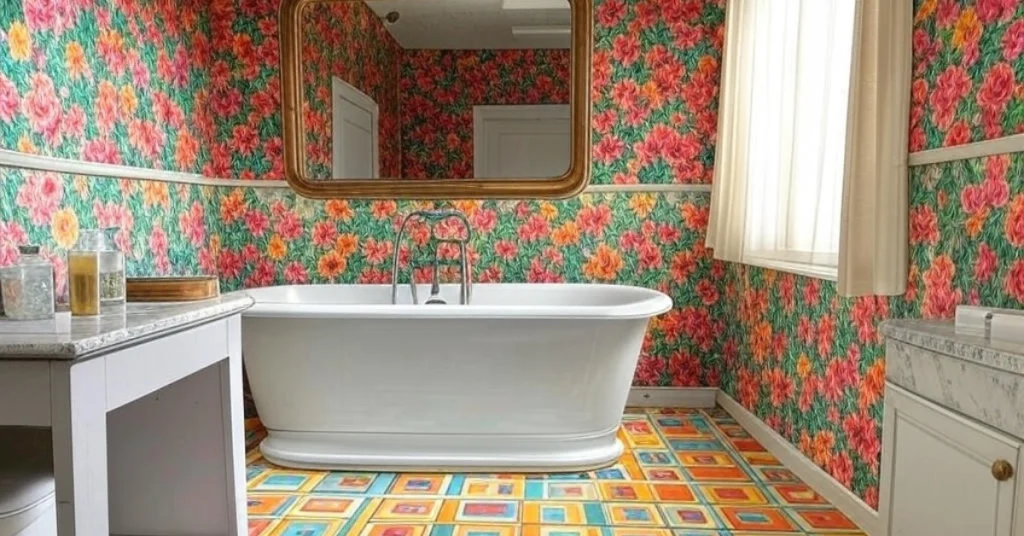
Burnt Orange Bliss:
- Burnt orange accent wall
- Mosaic floor tiles in earth tones
- Matte black fixtures
- Wicker storage baskets
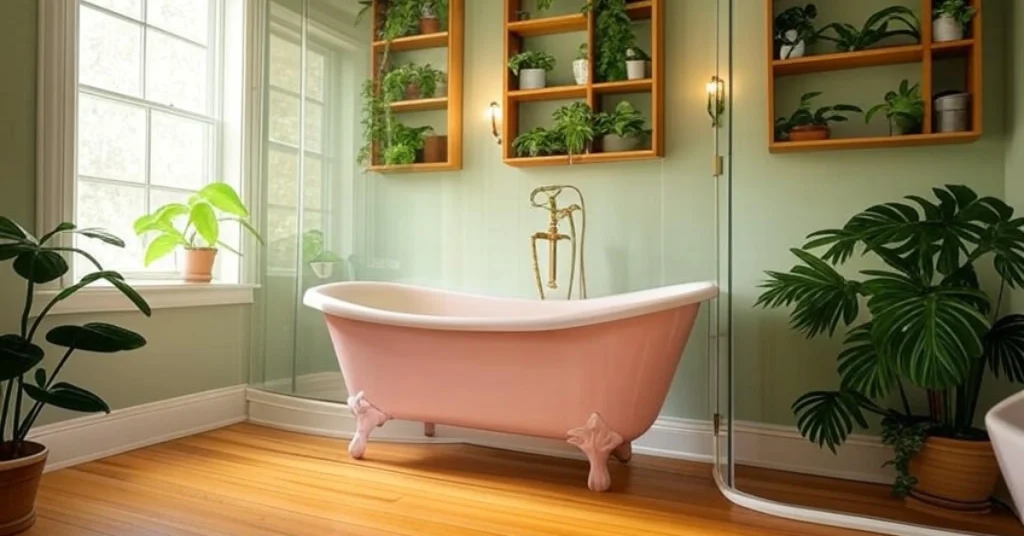
Retro Spa Retreat:
- Restored pink 1970s tub
- Glass shower enclosure
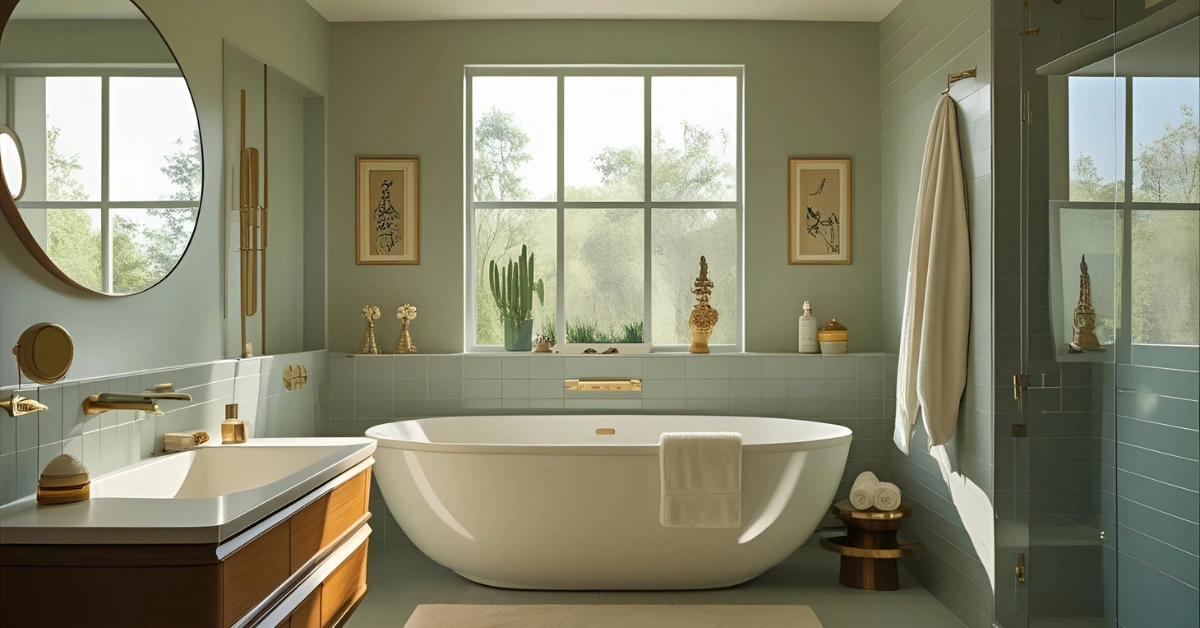
- Sage green walls
- Teak shelves with plants
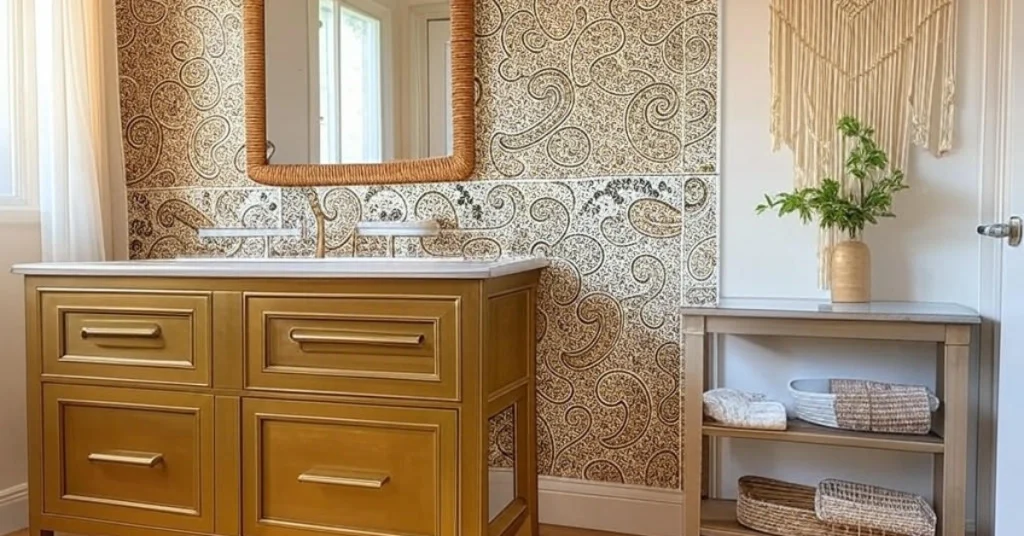
Bohemian Vibes:
- Paisley tile backsplash
- Harvest gold vanity
- Wicker mirror frame
- Macramé wall hanging
Common Mistakes to Avoid in a 1970s Bathroom Renovation
Reviving a 1970s bathroom can go wrong if you overdo the retro elements or neglect functionality. Avoid these pitfalls:
- Overloading on Color: Too many bold hues can feel chaotic. Stick to one or two accent colors.
- Ignoring Ventilation: 1970s bathrooms often lacked proper fans, leading to mold. Install a modern exhaust fan.
- Skipping Storage: Retro vanities were often bulky but lacked organization. Add built-in shelves or drawers.
- Using Dated Materials: Shag carpeting or low-quality tiles won’t hold up. Choose durable alternatives.
Designer Tip: “Balance is key. A 1970s bathroom should feel nostalgic but not like a museum exhibit,” says Laura Bennett (simulated).
Budgeting for Your 1970s Bathroom Renovation
Renovating a 1970s bathroom can range from $5,000 to $20,000, depending on scope. Here’s a breakdown:
| Item | Budget Option | Mid-Range Option | High-End Option |
|---|---|---|---|
| Tiles | $500–$1,000 | $1,000–$2,000 | $2,000–$5,000 |
| Vanity | $300–$600 | $600–$1,500 | $1,500–$3,000 |
| Fixtures | $200–$500 | $500–$1,200 | $1,200–$2,500 |
| Lighting | $100–$300 | $300–$700 | $700–$1,500 |
| Labor | $2,000–$4,000 | $4,000–$8,000 | $8,000–$12,000 |
Tips to Save:
- Restore existing fixtures instead of replacing them.
- Shop at salvage yards for vintage tiles or sinks.
- DIY painting or minor tiling to cut labor costs.
Sustainability in 1970s Bathroom Design
The 1970s embraced natural materials, making it easy to create an eco-friendly bathroom. Consider:
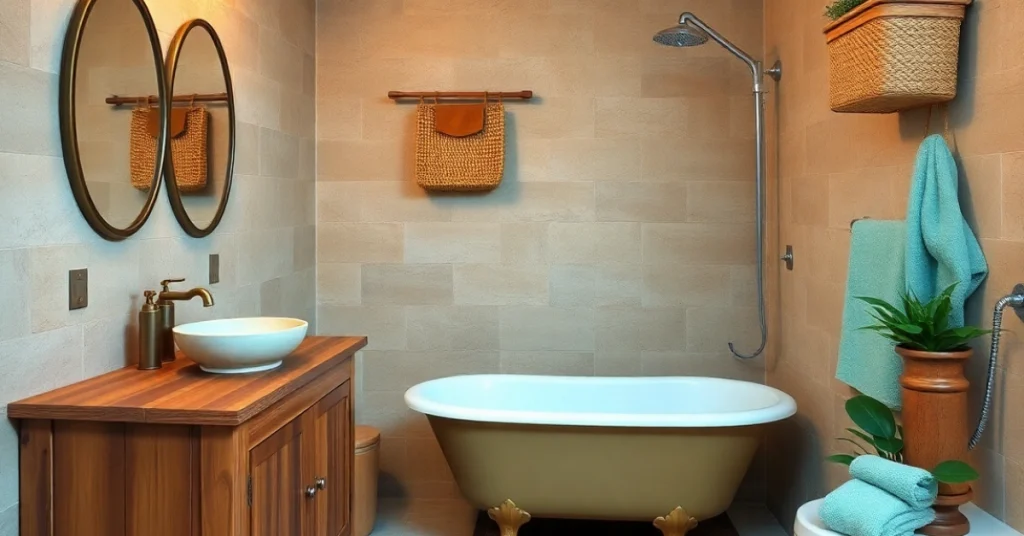
- Reclaimed Wood: Use salvaged teak for vanities or shelves.
- Vintage Fixtures: Restore old sinks or tubs to reduce waste.
- Low-Flow Fixtures: Cut water usage by up to 50% (EPA WaterSense Program, 2023).
- LED Lighting: Save energy with retro-style bulbs.
Example: A San Francisco homeowner sourced a 1970s clawfoot tub from a salvage yard, refinished it, and paired it with a low-flow showerhead, saving both money and resources.
FAQs About 1970s Bathroom Design
Q: Can I keep my original 1970s fixtures?
A: Yes, if they’re in good condition. Refinish or re-glaze tubs and sinks for a fresh look, and update plumbing for efficiency.
Q: Are 1970s colors too bold for small bathrooms?
A: Not if used strategically. Try an accent wall or colorful accessories to add retro flair without overwhelming the space.
Q: How do I make a 1970s bathroom feel modern?
A: Pair retro elements with sleek fixtures, neutral tiles, and smart storage. Add modern lighting for balance.
Q: Where can I find 1970s-inspired tiles?
A: Check brands like Fireclay Tile, Daltile, or Etsy for vintage-style options.
Conclusion:
A 1970s bathroom offers a unique opportunity to blend bold, nostalgic design with modern functionality. By embracing iconic elements like avocado green fixtures, geometric tiles, and teak vanities, you can create a space that feels both retro and timeless. With careful planning, sustainable choices, and a touch of creativity, your bathroom can become a standout feature in your home.
Ready to transform your bathroom with 1970s flair? Start by sketching your dream design or consulting a local designer for personalized advice. Share your retro-inspired projects in the comments below or explore our Pinterest board for more 1970s bathroom inspiration!